

How To Repair Out Of Round Rotor
This article will outline the diagnosis and repair of a bent or warped rotor, both when using common manus tools and using a rotor truing approximate such as the Park Tool DT-3.
1
Preliminary Info
What Tools do I need?
- Rotor Truing Fork: DT-2
- Wheel Truing Stand
- Rotor Truing Gauge: DT-3
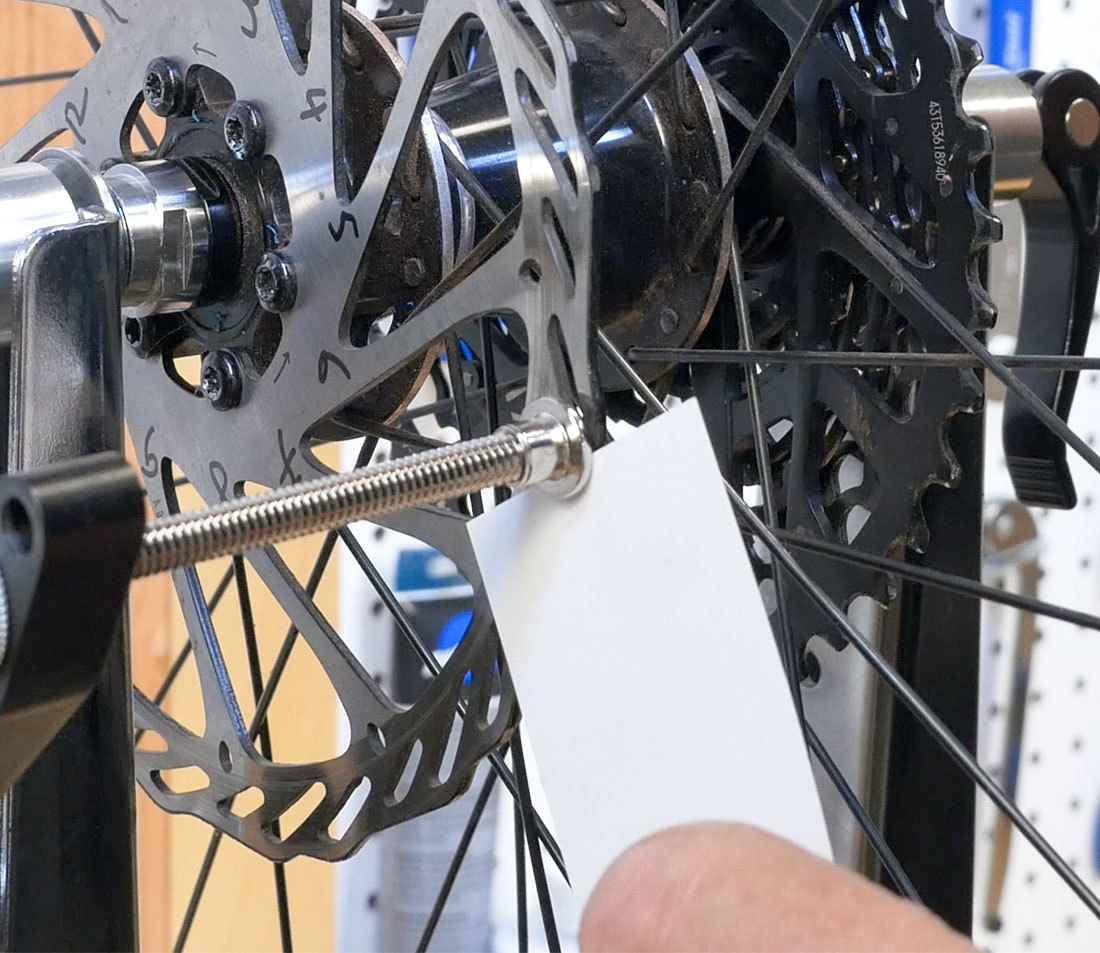
- A flashlight is useful, merely fifty-fifty a white sail of paper held behind the caliper can aid make lateral deviations, also chosen runout, visible as the rotor spins.
- For the highest level of accuracy, a dial indicator: DT-3i.2
Rotors can become warped from use, abuse or simply past getting too hot. One of the near common causes of a bent rotor is from a straight impact when parking or storing the bike. It is even possible for new rotors to take some problems. If a rotor has been desperately bent, especially from impact, it'southward best to simply replace it.
It can be catchy to determine whether a rotor is repairable. A adept rule of pollex: if the rotor does not show comeback inside a few minutes of attempting repair, it has probably reached the finish of its lifespan. If ever in doubt, replace with a new i. When a rotor is deformed past a certain point, y'all can button it around, but it will never be directly.
CAUTION: Anytime y'all are working around rotors, be careful. The edges tin can be sharp, and when they rotate it can have quite the slicing result.
2
Diagnosis
A rotor in need of straightening will likely bear witness up as a rub or noise as it passes through the caliper.
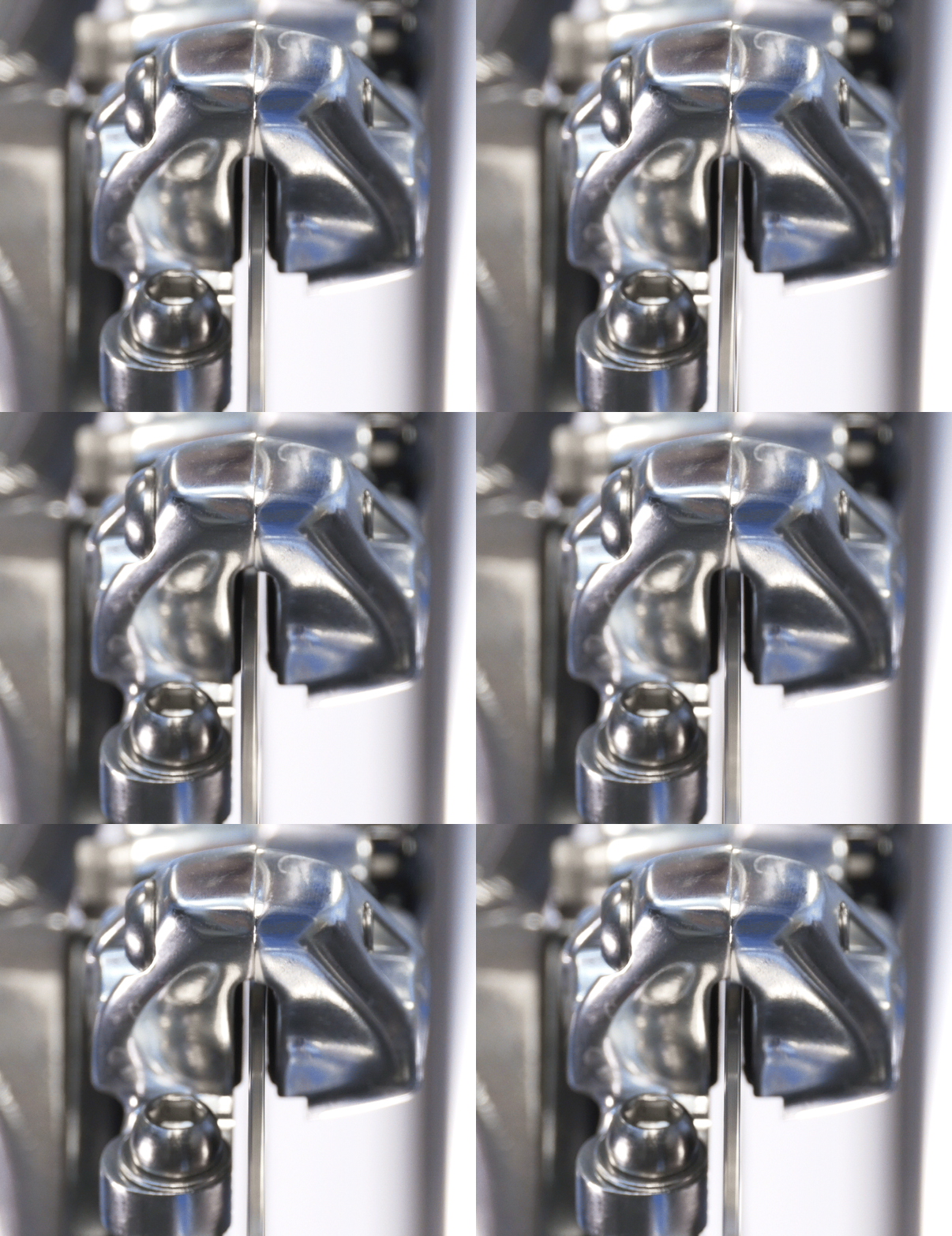
Yet information technology'south important to know there are other things that can exacerbate this symptom. There are two quick things to check earlier getting started:
- Cycle alignment if you lot have open drib-outs. Seating the bike properly may solve the upshot.
- Bearing play at the hub is also easy to check for past rocking the wheel back and forth as shown. If at that place'south play, prepare it.
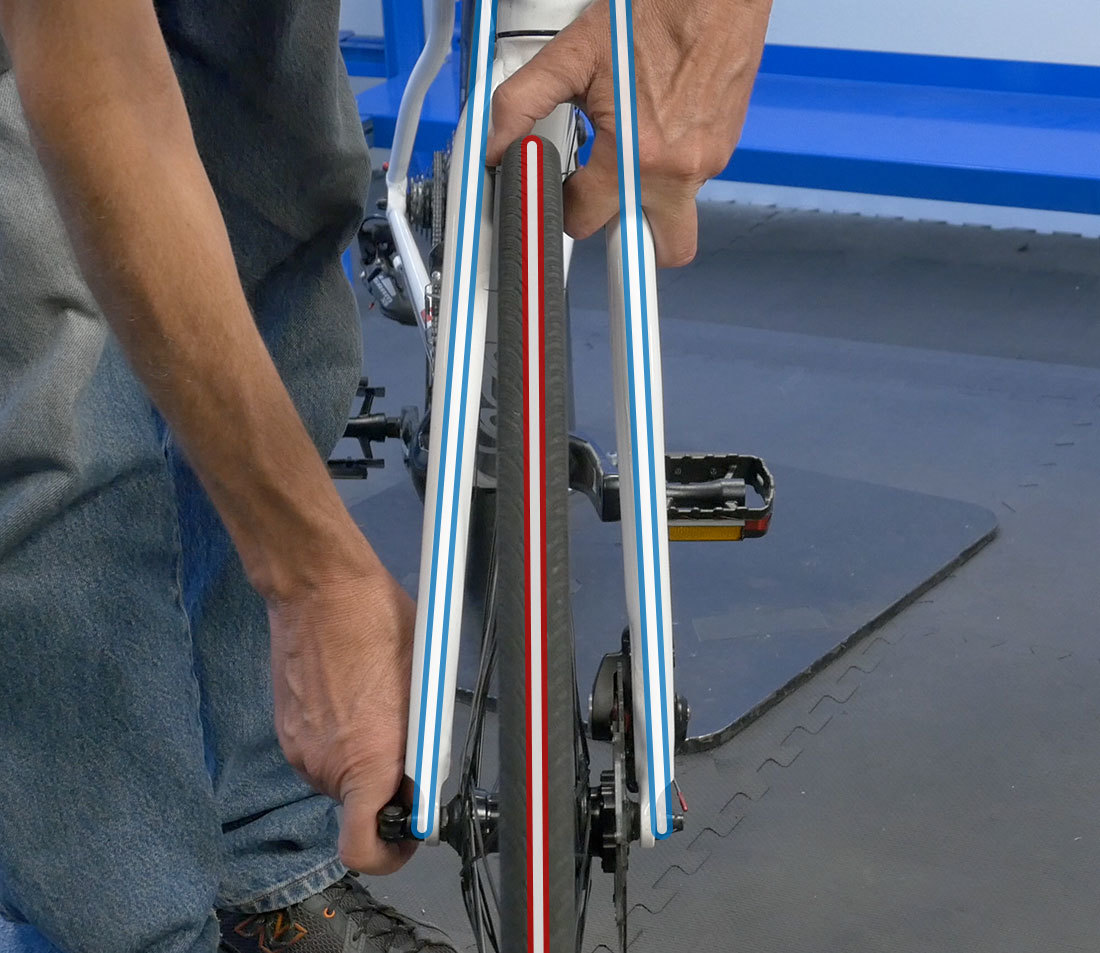
Wheel that is misaligned in the dropout — loosen and re-seat
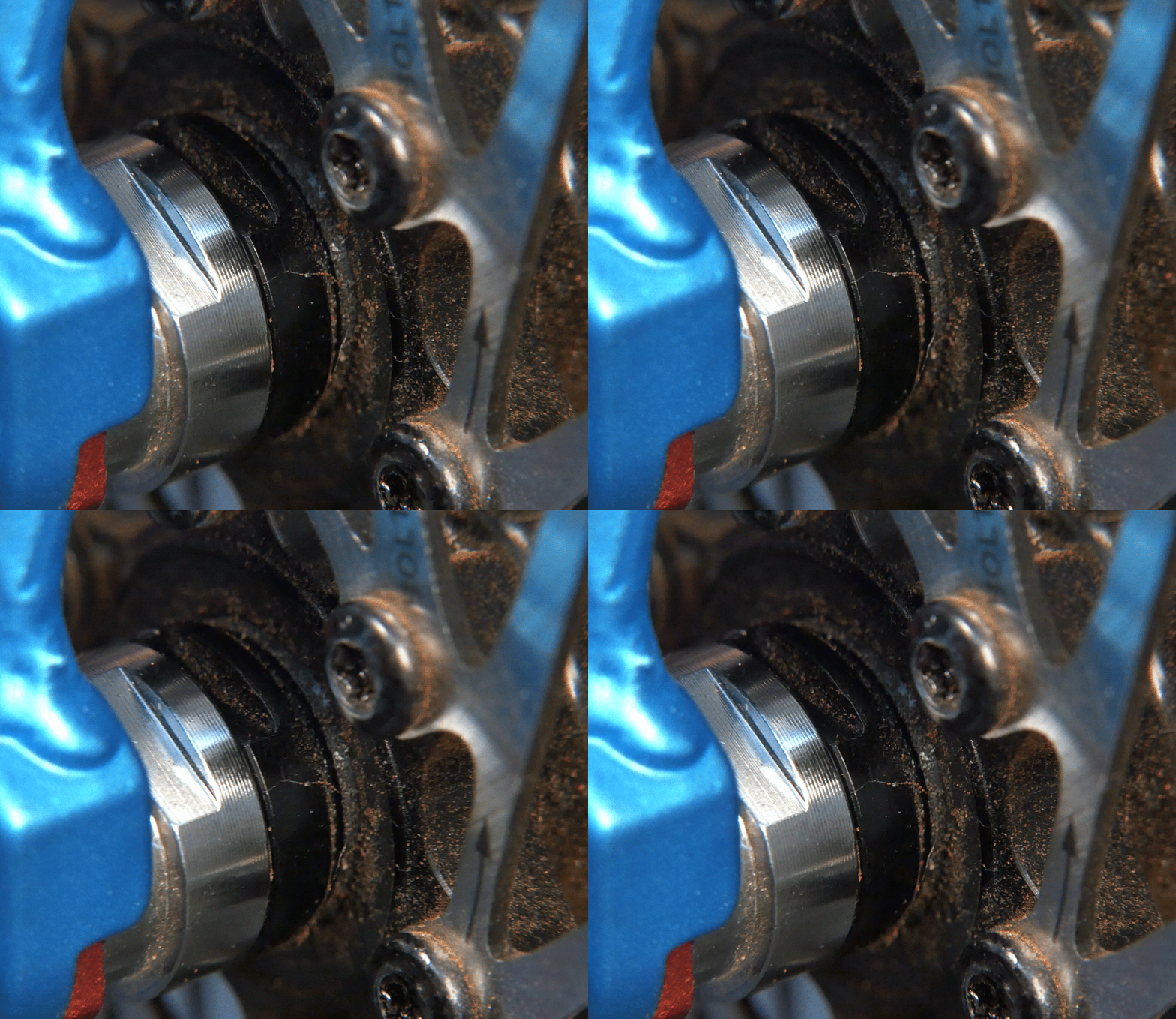
Visible play at the hub
After verifying that the cycle is properly seated, information technology's okay to start truing the rotor, but it's always good to know other things that lead to rotor rub:
- Misaligned brake calipers due to poor alignment by the installer — see Disc Brake Alignment: Mechanical and Hydraulic.
- For mechanical disc brakes, drag in the cablevision and housing system tin cause the pistons to not fully retract — see Brake Housing & Cable Installation: Upright Bars and Drop Confined.
- Hydraulic brakes can besides have sticky pistons caused by dirt and muck — see our video on How to Clean Brake Pistons.
- Brake mounts on the frame may be misaligned, preventing proper pad alignment to the rotor face. Professionals will employ a facing tool such as the DT-five.2 to correct the issue.
- Loose mounting bolts or a loose lockring will proceed the rotor from fully securing to the hub mounts — run into Disc Restriction Rotor Removal & Installation for proper tightening procedures.
3
Truing on a Bike
A bones truing of the rotor can sometimes be washed with the wheel on the bike by using the brake pads every bit a reference point.
- Set the wheel in a stand or upside down on the basis in club to get the cycle spinning freely.
- Watch for wobble at the caliper between pads. Look for the opening and closing of the gap. Find a department of the rotor that needs truing, and note which way information technology needs to be bent to correct the runout.
- Here, a flashlight can be useful. A sheet of paper can also help make the lateral deviations, called runout, more than visible equally the rotor spins.
- Rotate this section of the rotor out of the caliper.
- Utilize a rotor truing fork tool to flex the rotor in the appropriate direction in lodge to improve the bend. Ever begin with a pocket-size corporeality of try on the tool, and and then apply more attempt if no improvement is seen.
- Spin the wheel and sight the rotor again. Echo as necessary. When the rotor is not rubbing the pads as it spins, information technology is adequately straight.
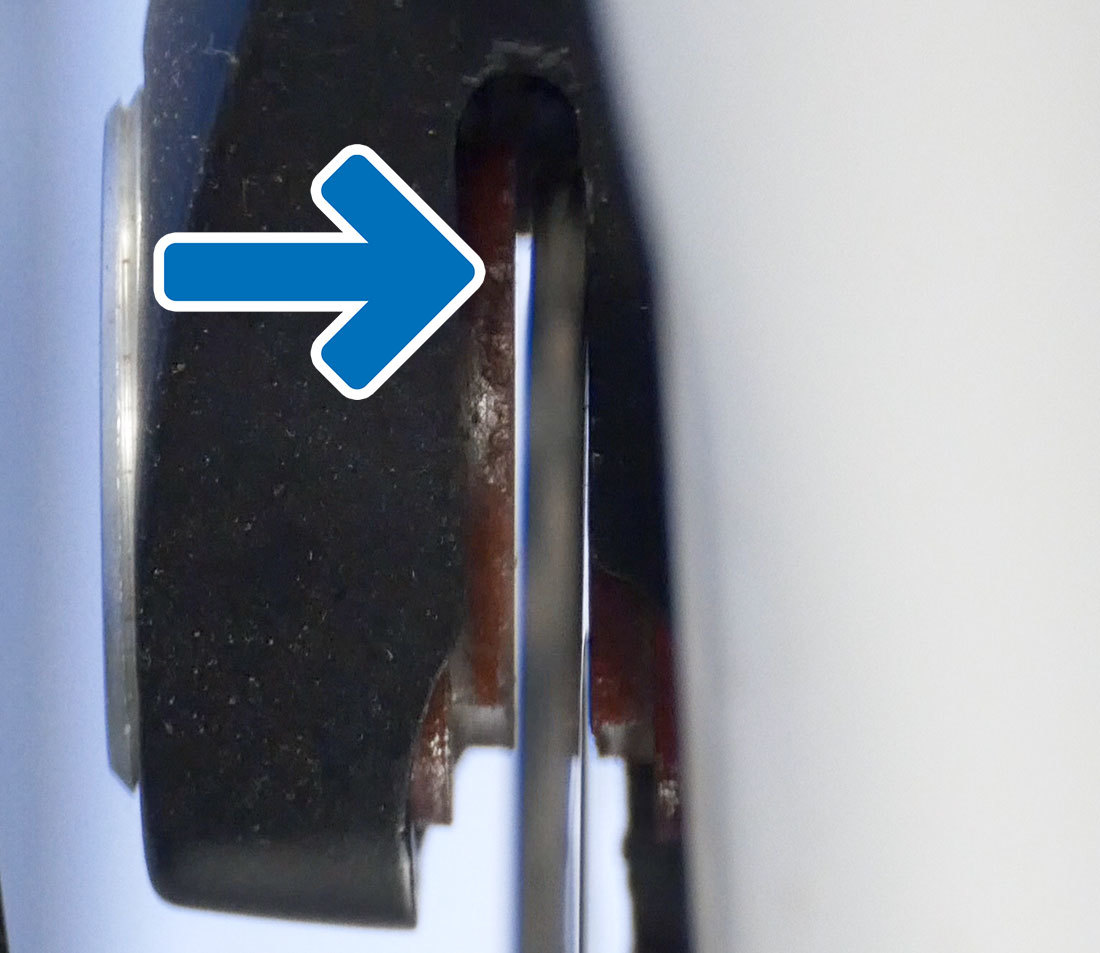
Difference to the outside
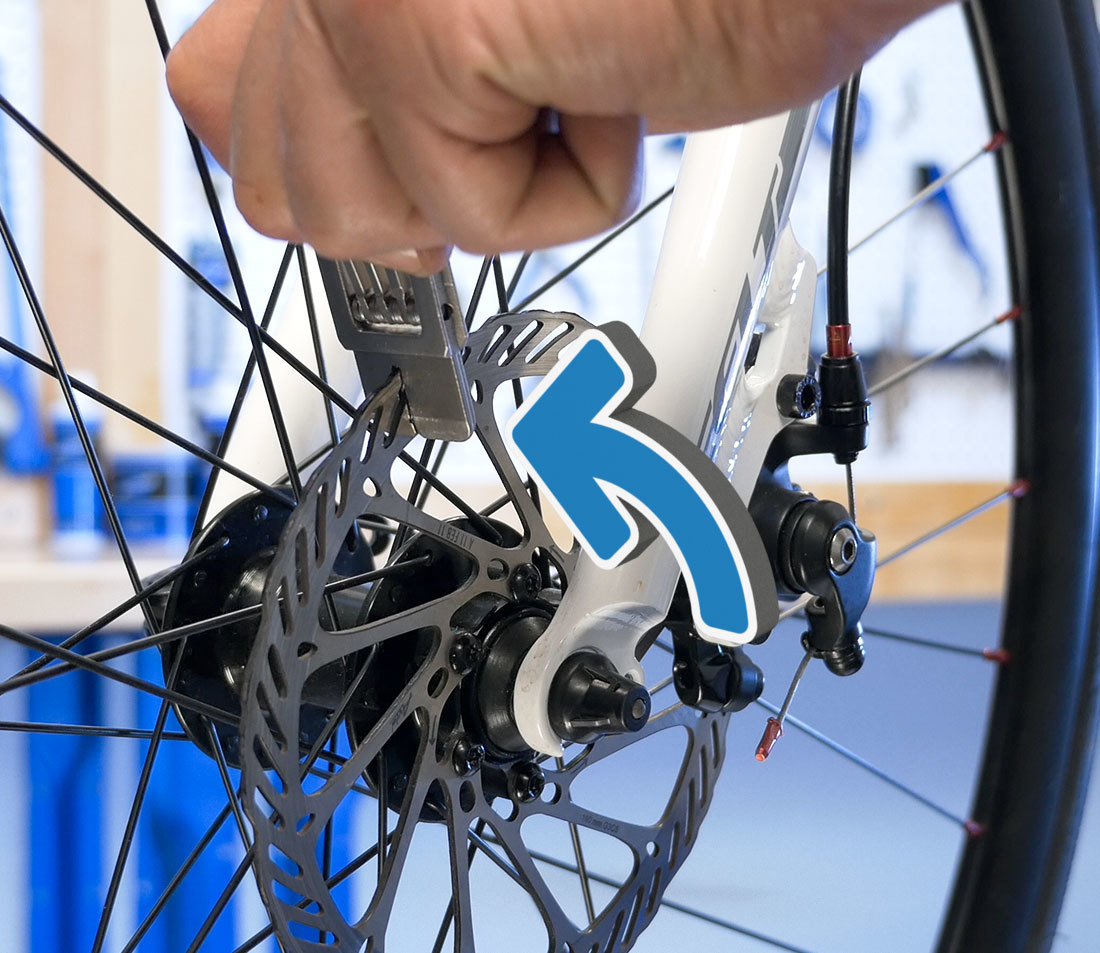
Flex the rotor towards the inside
4
Rotor Truing with Truing Stand up and DT-3
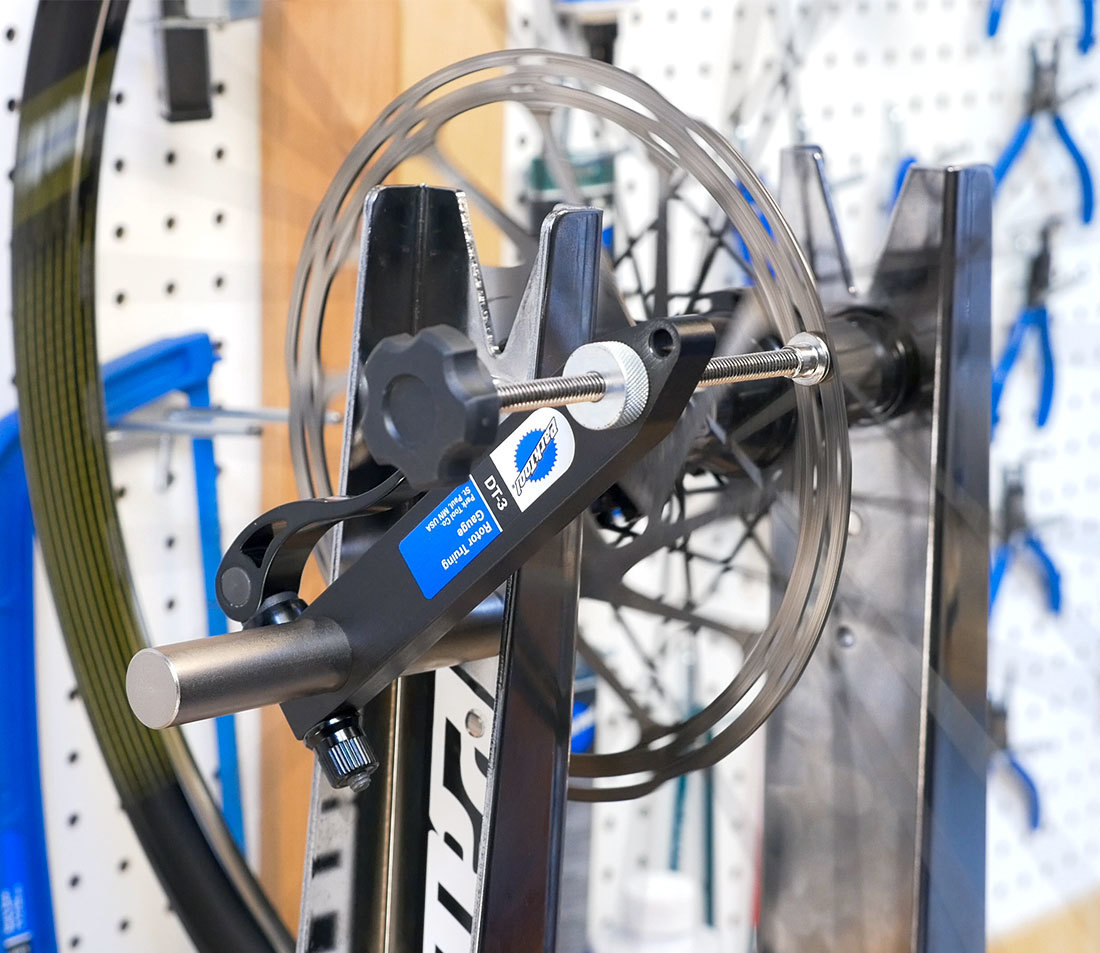
It is often easier and faster to get a more accurate correction past pulling the wheel and putting it in a truing stand up equipped with a rotor truing guess such as the Park Tool DT-3.
It can be helpful to number the rotor arms using a mark in guild to rails the progress. These tin can be easily wiped off later using acetone or alcohol.
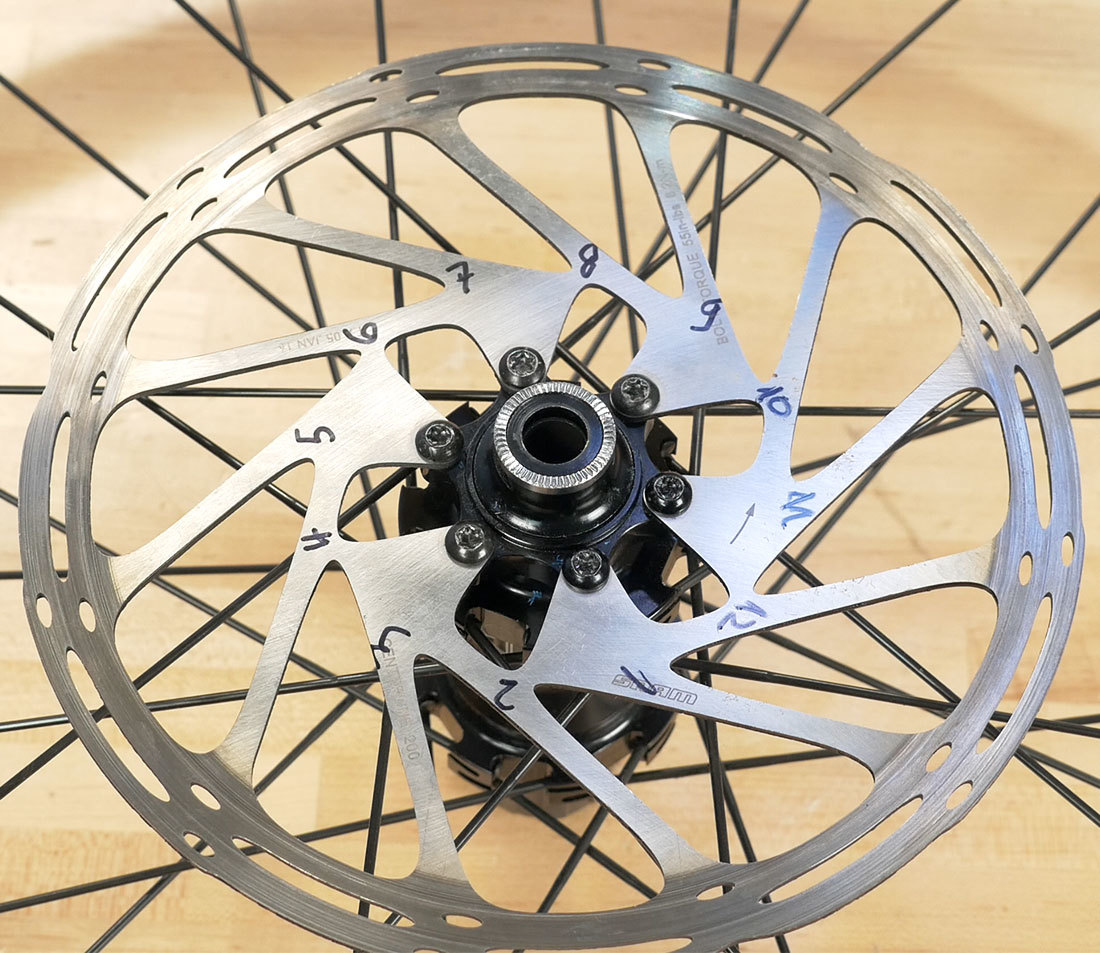
- Align the gauge of the DT-3 to the outer perimeter of the rotor and spin the cycle. Slowly movement the gauge end until you brand light contact with the rotor.
- Stop the wheel at a lateral deviation, and apply the DT-ii to flex and then bend the rotor.
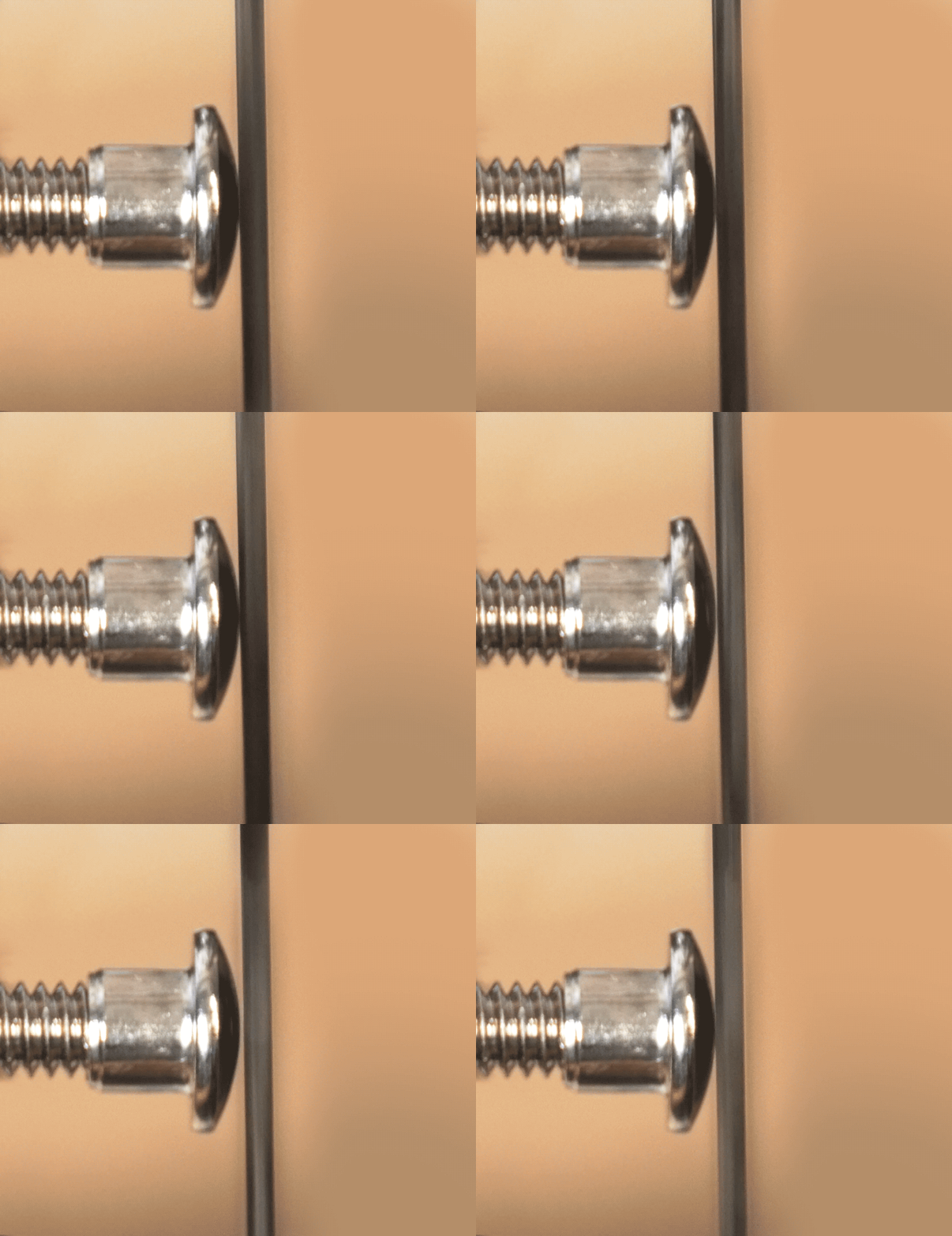
Lateral deviation to the within
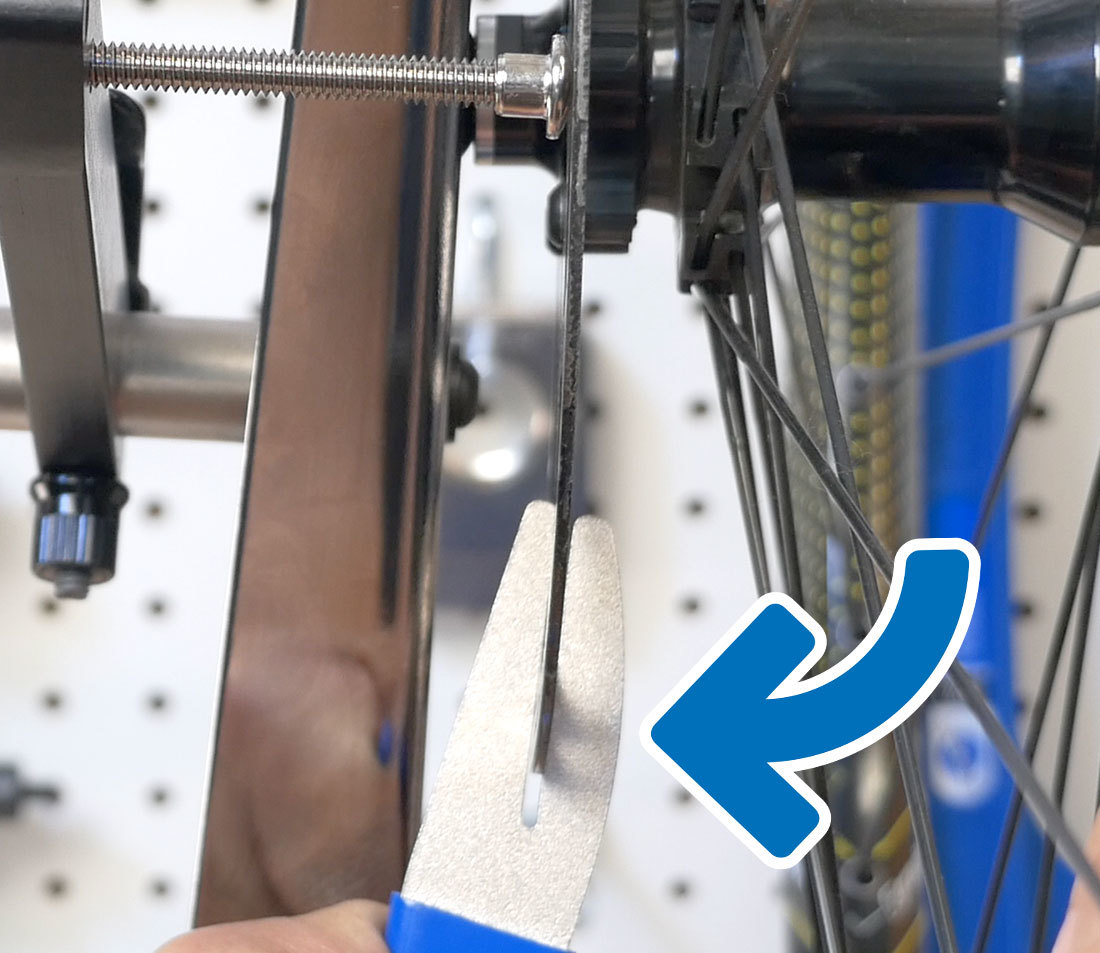
Right this deviation past bending towards the exterior
- Apply the long slot of the DT-ii as shown for narrower corrections. For wider corrections, use the short slot and appoint the tool at the arm.
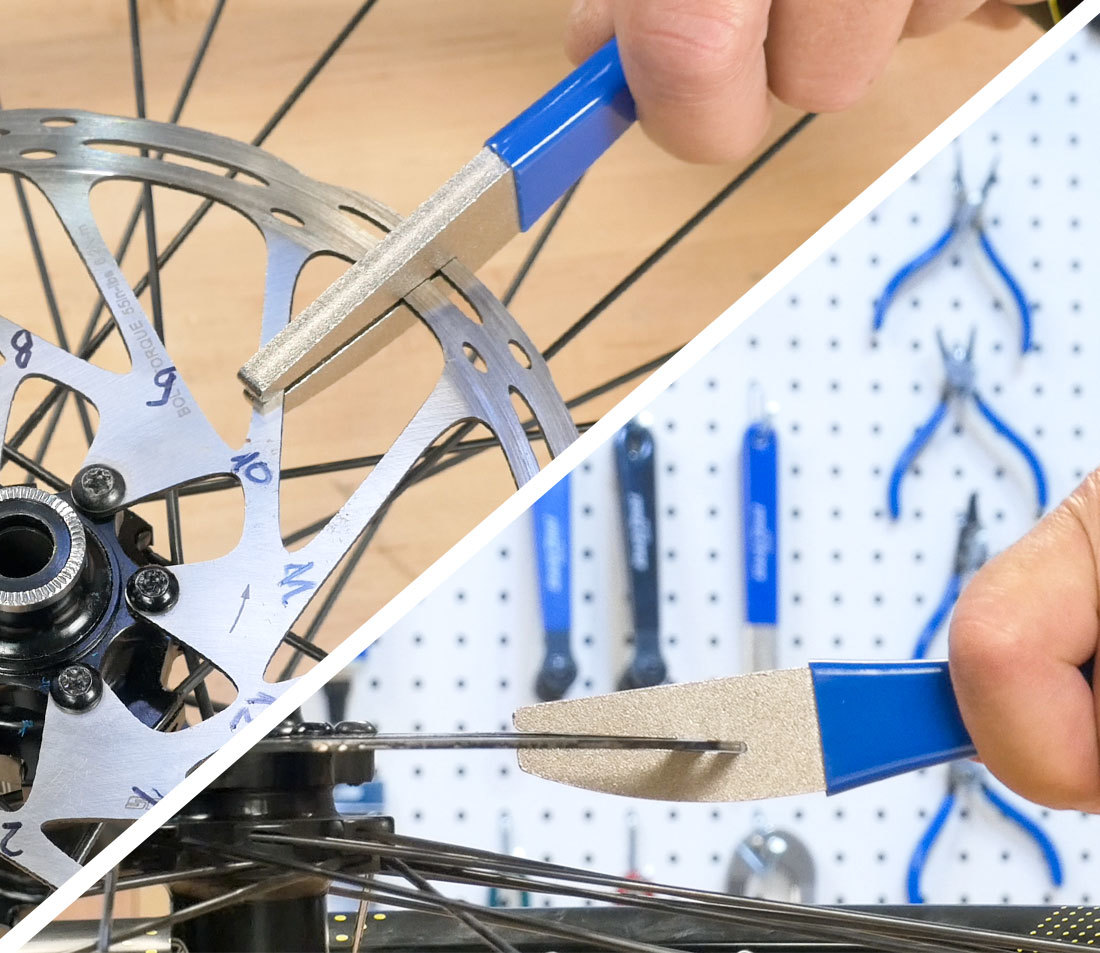
Long slot for narrow corrections
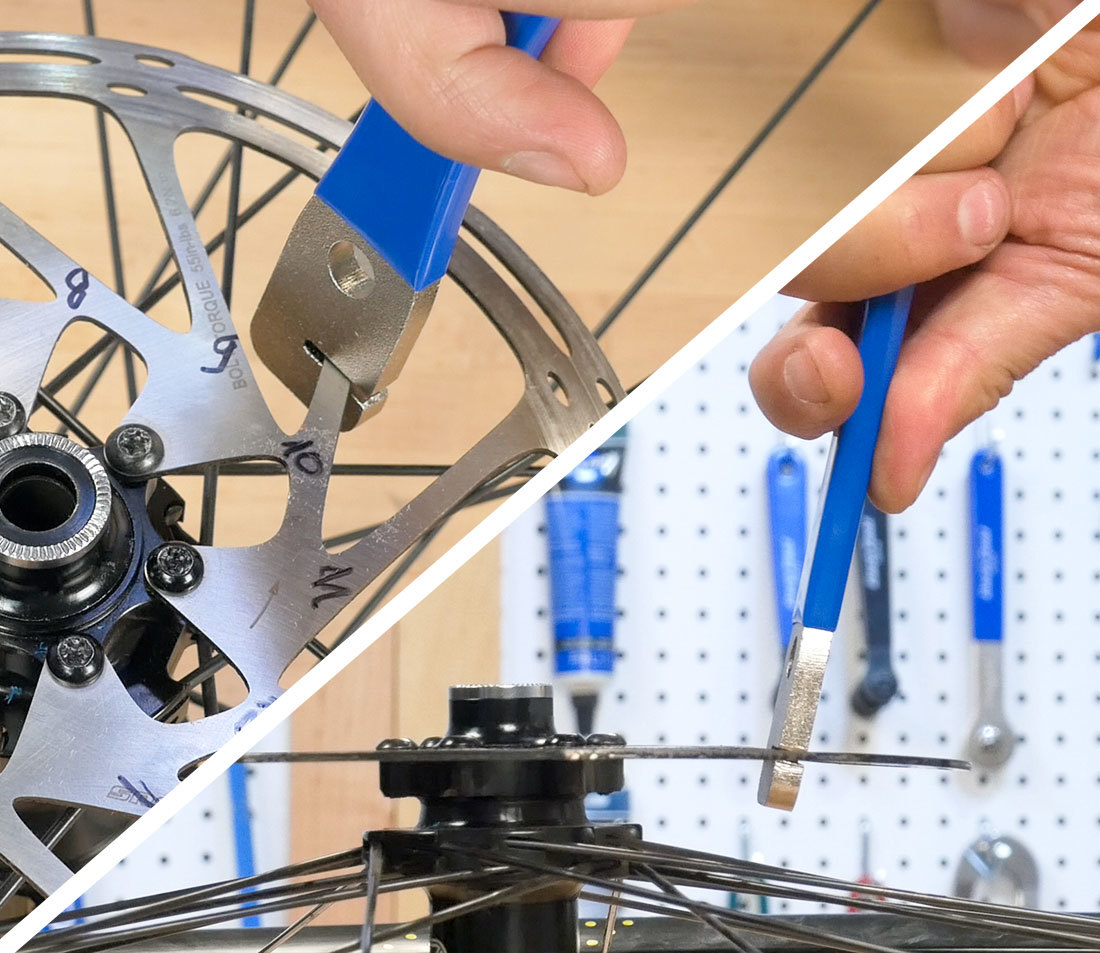
Short slot for wider corrections
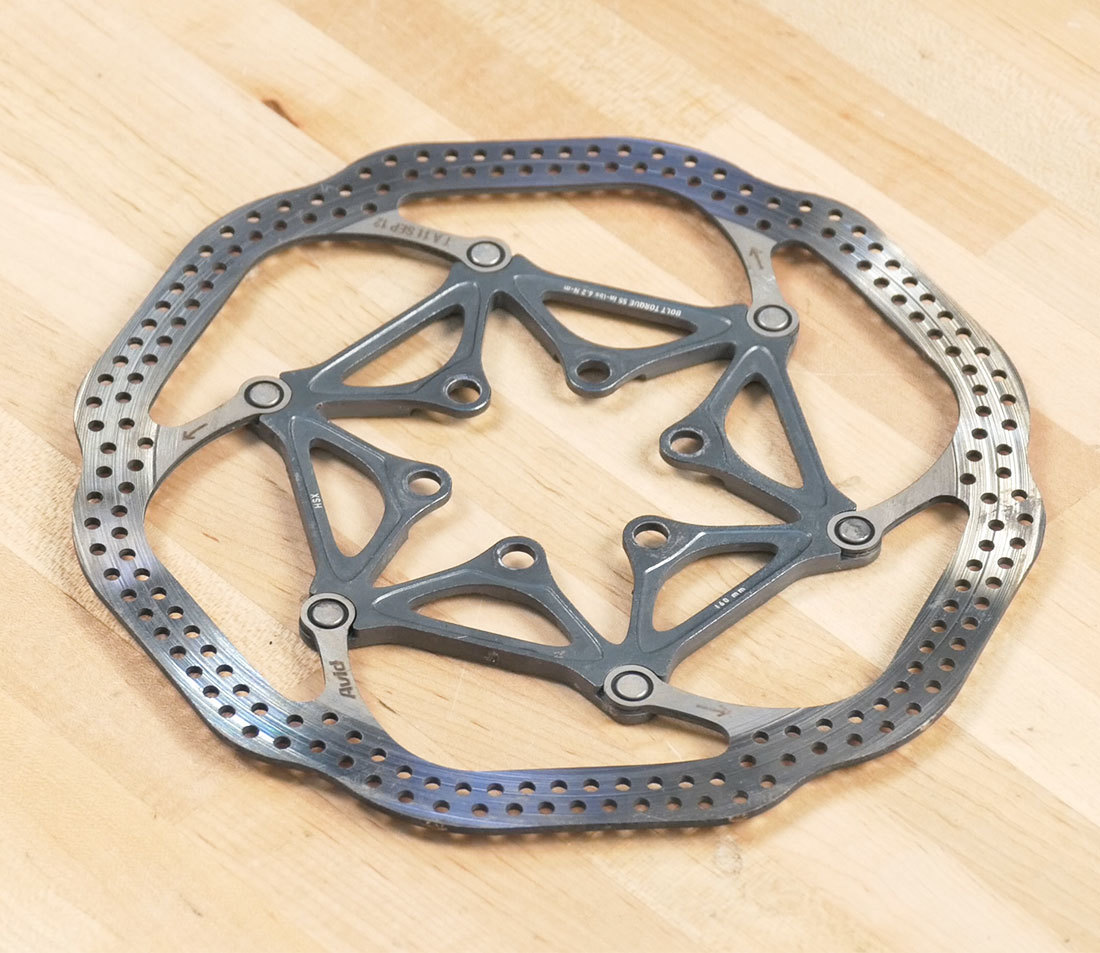
- However, do not attempt to curve 2-piece rotors at the arms — bend just at the outer perimeter of the rotor.
- When the size of the departure is smaller than a business carte, so it is adequately true.
five
Dial Indicator DT-3i.2
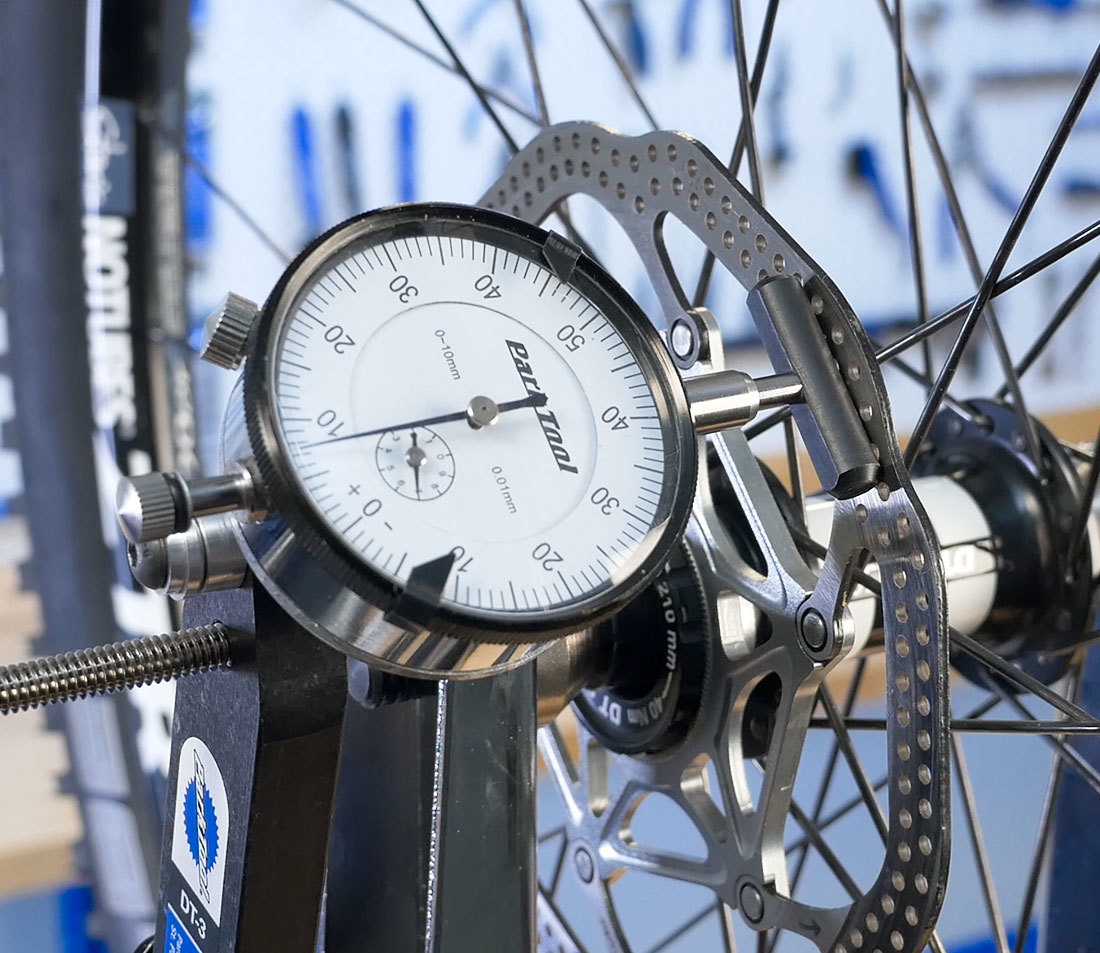
The DT-3 tin be fitted the DT-3i.2 Dial Indicator Kit. The plunger end of the DT-3i.2 rides against the rotor and magnifies any divergence, allowing subtle bends to be easily seen using the punch indicator. The DT-3i.2 reads in increments of .01 mm and uses a "balanced face," reading both clockwise and counterclockwise from "0."
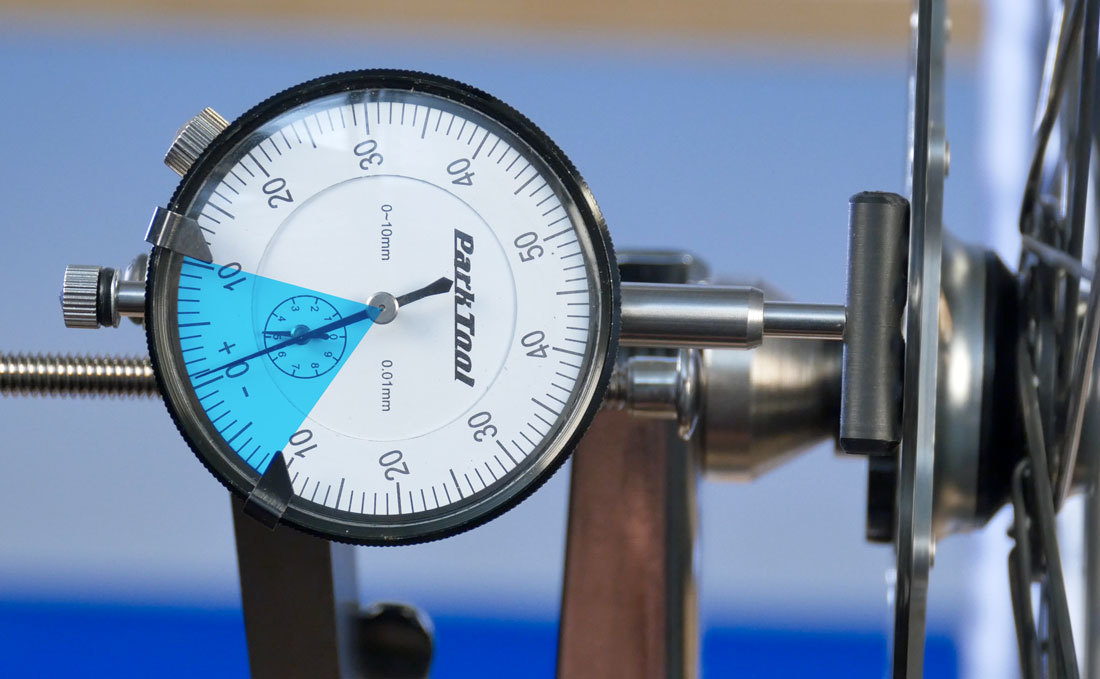
Values exterior the target are isolated and adjusted. When the variance falls in the target range, in our example .2mm, the rotor is true.
More detailed instructions are included with the DT-3i.2 and are available in the Park Tool Document Library.

How To Repair Out Of Round Rotor,
Source: https://www.parktool.com/blog/repair-help/disc-brake-rotor-truing
Posted by: pagannelf1973.blogspot.com
0 Response to "How To Repair Out Of Round Rotor"
Post a Comment